
Exhibition & Museum Work
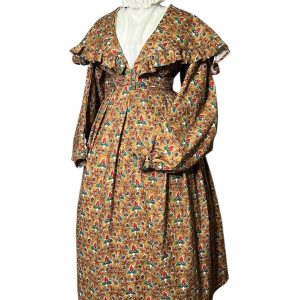
Genesee Country Village & Museum
This 1830s gown was recreated in collaboration with Kenna Elizabeth, who prepared the pattern and documentation, and Genesee Country Village & Museum, who provided a high-quality scan of the original textile. Using their work as a foundation, I constructed the dress with a custom fabric that reflects the original design while adapting it for modern wear.
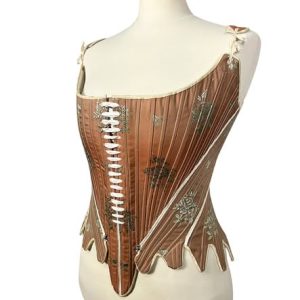
Museum of the City of New York
These stays, dating to around 1780 and based on an original from the Museum of the City of New York, showcase the transitional design of late 18th-century anatomically shaped stays. Constructed in layered dark pink taffeta with silver brocade and 92 boning channels, they follow authentic period techniques while serving as a study in historical construction and proportion.
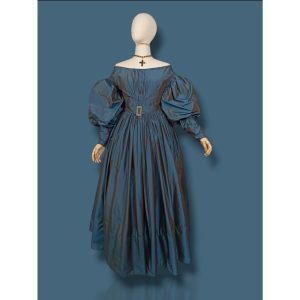
A gown based on an object from a private collection
This 1830s gown, recreated from a pattern by Kenna Elizabeth and inspired by an original in Abby Cox ’s collection, is made from navy-black shot silk taffeta with a hand-sewn construction and period-inspired structural details. While faithfully following the original, I introduced subtle adjustments, like a self-fabric belt and refined bodice pleating, balancing the dramatic gigot sleeves and reflecting the transitional fashion of the early Romantic era.
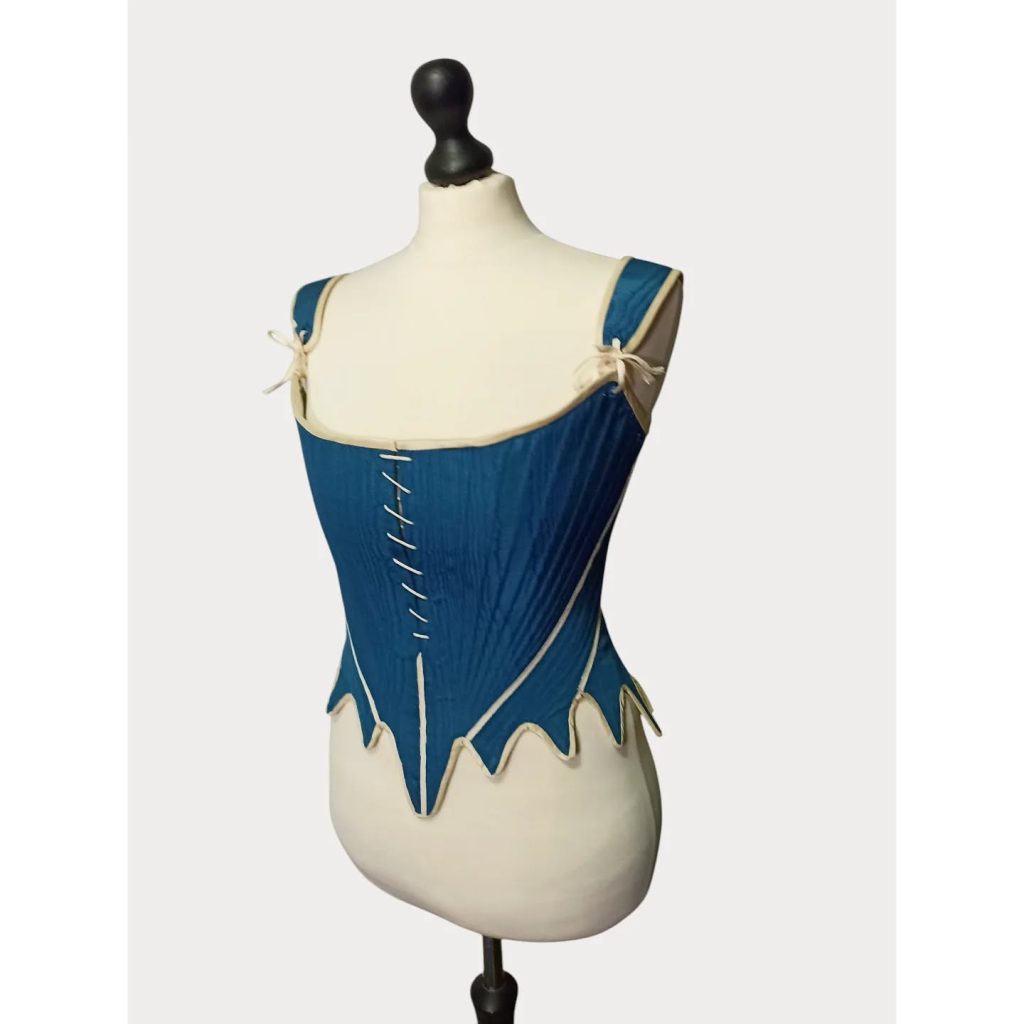
Secrets Beneath the Dress
I reconstructed stays using historical sewing methods, based on Scroop Patterns. The augustastays and cassandrastays patterns can be made the traditional way with buckram or in a modern version with coutil. I used blue mori, a fabric that has appeared in several films and commercials. Although essential to the garment’s structure, it remains invisible to the viewer, hidden beneath the dress.
a gown commissioned for the Saxon Palace in Kutno
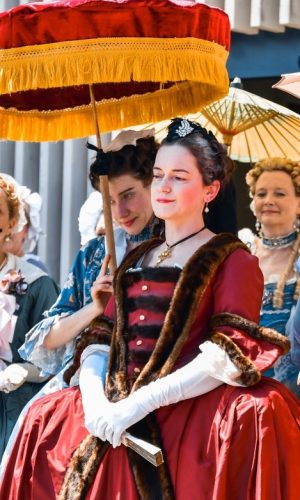
This gown represents court fashion of the 1740s, a period situated at the height of early Rococo, when female dress was defined by elaborate construction, pronounced volume, and rich surface ornamentation. The silhouette is shaped by a rigid corset and wide panniers, creating the characteristic horizontal expansion of the skirt that dominated aristocratic fashion in mid-18th-century Europe. The design is closely informed by contemporary portraiture, particularly the depiction of Maria Antonia of Bavaria painted by Pietro Antonio Conte Rotari, whose works exemplify the refined elegance and ceremonial gravity of elite court dress. The gown is executed in red silk of a lustrous finish, a colour strongly associated in the eighteenth century with power, dynastic prestige, and ceremonial authority. The intensity of the red silk is deliberately contrasted with dark fur trimming, applied along the front opening of the mantua-style skirt and at the hem, as well as on the sleeve cuffs. The use of fur an uncommon but highly luxurious element in women’s dress suggests a winter ceremonial context and reflects northern and central European court traditions, where costly furs functioned as visible markers of wealth and status. Structurally, the gown follows the form of a robe à la française or a transitional court mantua, with an open front revealing a matching petticoat. The vertical emphasis created by the fur-trimmed opening visually elongates the torso while guiding the eye toward the centre of the composition, a device frequently employed in formal portraiture. The bodice is closely fitted, shaping the upper body into a smooth, conical line typical of the 1740s, while the skirt falls in deep, sculptural folds supported by the panniers beneath.
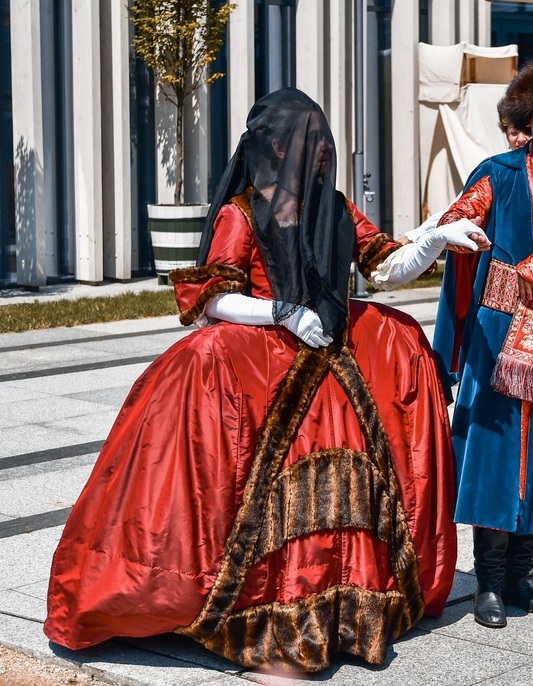
The sleeves are cut to the elbow and finished with broad fur cuffs, beneath which the white linen sleeve ruffles of the chemise are visible. This layering of textures—silk, linen, and fur—was a hallmark of elite dress in the period and contributed to the visual richness expected in aristocratic representation. The restrained decoration allows the quality of materials and the architectural form of the garment to dominate, aligning with the aesthetic ideals of dignity and controlled opulence.
Overall, the gown is conceived as a highly formal, representational garment intended for court appearances, ceremonial occasions, or portrait sittings. Its monumental silhouette, luxurious materials, and iconographic references place it firmly within the visual culture of mid-eighteenth-century aristocracy, where dress served not merely as fashion but as a powerful expression of rank, authority, and dynastic identity.
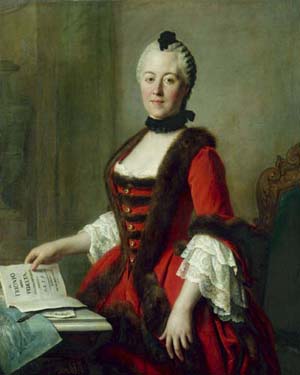
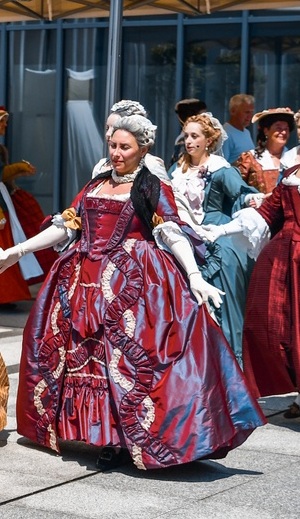
This gown is a French robe à la française from the 1740s, exemplifying the refined elegance of Rococo court dress. The silhouette is defined by wide panniers and the characteristic Watteau pleats flowing from the shoulders, creating a harmonious balance between vertical movement and horizontal volume.
The gown is made of two-tone silk taffeta, whose subtle colour shifts enhance the sculptural quality of the garment and reflect the high level of textile craftsmanship typical of mid-eighteenth-century France. The fitted bodice and open front reveal a coordinated petticoat, while elbow-length sleeves finished with white ruffles (engageantes) add softness and contrast to the structured form.
Designed for formal and ceremonial use, this robe à la française reflects the dominance of French fashion in the 1740s and serves as a visual expression of status, luxury, and cultural sophistication.
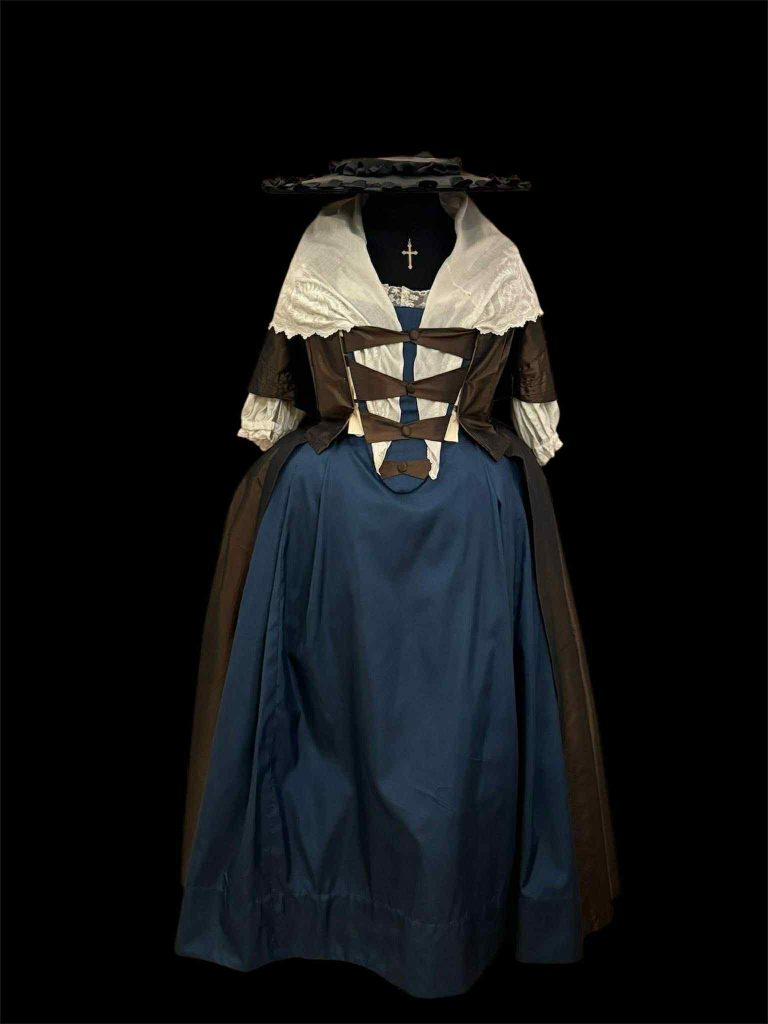
This is an English open gown dating to the 1740s, associated with the attire of a housekeeper or lady’s attendant. The gown is made of silk taffeta and features an open front revealing the petticoat beneath, a practical yet respectable form typical of English dress of the period.
Compared to contemporary French fashions, the silhouette is more restrained, emphasizing functionality and modest elegance. The fitted bodice, structured stomacher, and layered accessories reflect the social role of the wearer, balancing decorum with durability. Such gowns were worn in domestic and supervisory settings, embodying the understated refinement characteristic of mid-18th-century English taste.
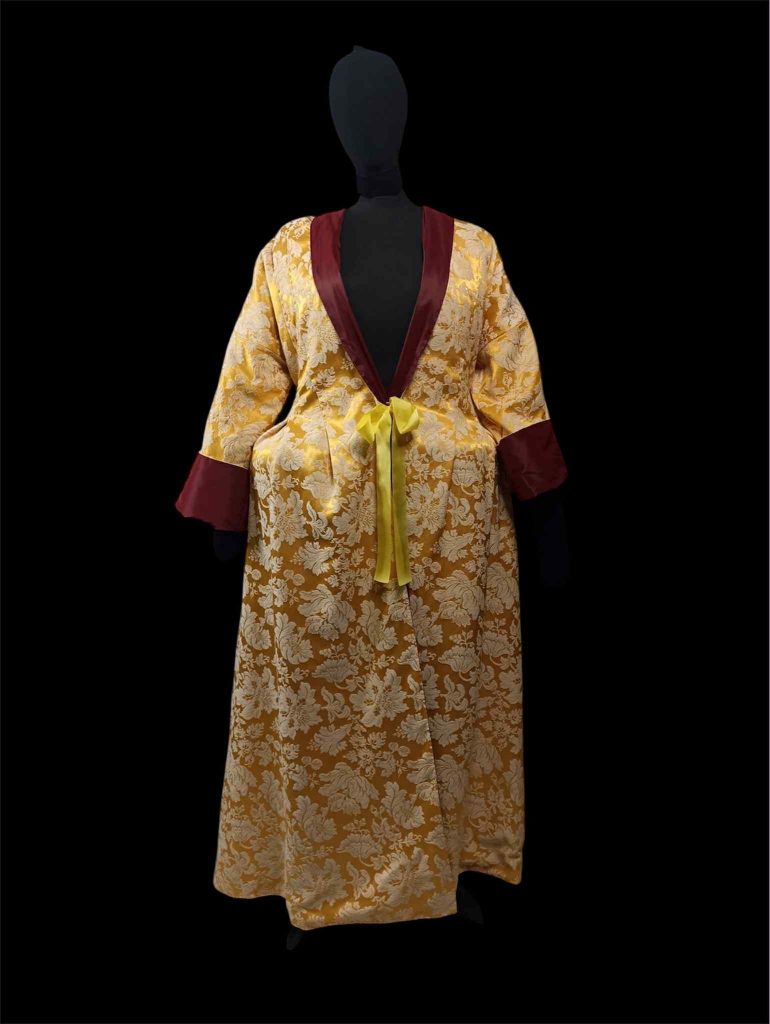
This garment is a quintessential mid-18th-century banyan, crafted from yellow adamska fabric a blend of cotton and silk lined with fine silk to enhance both its structure and drape. The banyan was a form of informal domestic attire, popular among men of the period for its comfort, elegance, and adaptability within private spaces. The choice of yellow adamska, a fabric characterized by its soft sheen and subtle patterning, reflects contemporary taste for refined yet approachable materials suitable for home wear.
The banyan’s construction emphasizes relaxed elegance: its loose-fitting body, flowing sleeves, and generous cut allowed freedom of movement, making it ideal for activities ranging from reading and writing to hosting informal gatherings within the domestic sphere. The silk lining not only added a layer of warmth but also elevated the tactile experience, demonstrating that even garments intended for private use were designed with an attention to material quality and comfort.
In addition to its practical function, this banyan reflects broader cultural influences. By the mid-18th century, banyans in England were inspired by Asian robes and “Oriental” textiles, which were admired for their exoticism and aesthetic appeal. The garment’s relaxed silhouette contrasted with the more structured and formal court attire of the period, embodying an ideal of personal leisure and cultivated taste.
Overall, this yellow adamska banyan represents a convergence of comfort, elegance, and social signaling, illustrating how mid-18th-century men negotiated private and semi-public identities through dress. Its combination of cotton, silk, and carefully considered lining exemplifies the material sophistication and aesthetic discernment characteristic of mid-century domestic fashion.
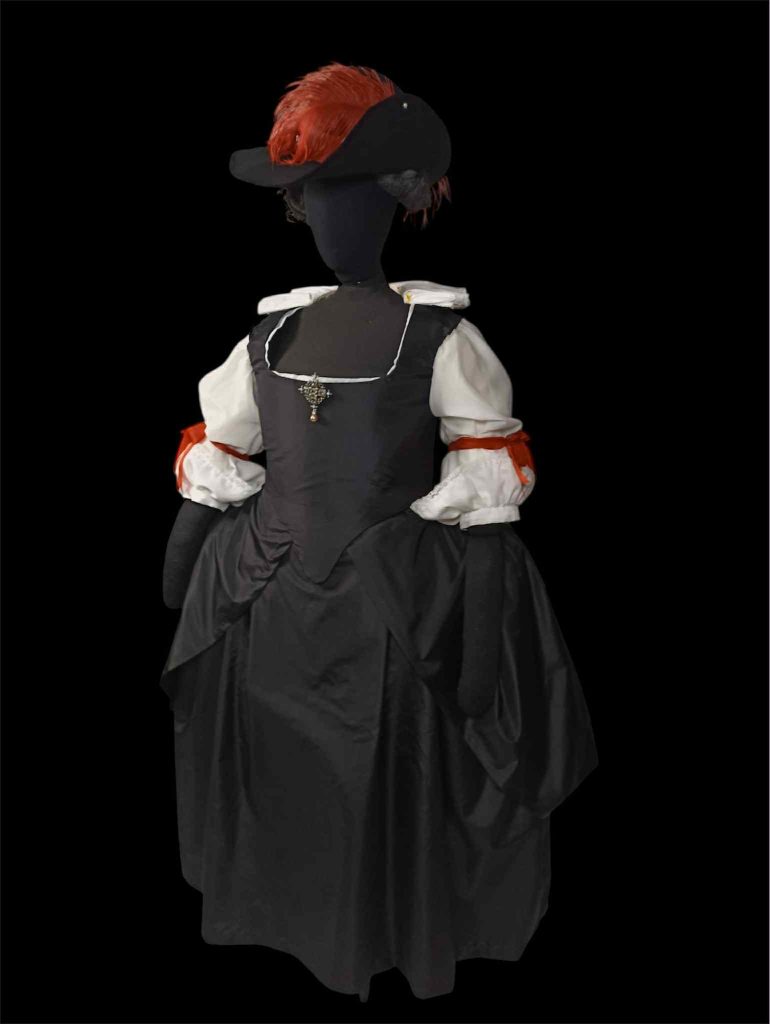
his mid-18th-century carnival gown is made entirely of black silk and exemplifies the “Van Dyke” style, inspired by portraits of 17th-century ladies. The gown features a characteristic open-front skirt and a draped upper skirt forming a distinctive train, typical of this style, giving it a theatrical and striking appearance.
The contrasting white sleeves, decorated with red ribbons, provide a vivid color accent and emphasize the elegance of the outfit. The ensemble is completed with a black hat adorned with red feathers, enhancing the carnival opulence and referencing Baroque grandeur.
The gown was worn both during carnival celebrations and in the context of portraiture by noblewomen, who often drew on 17th-century patterns, blending historical inspiration with contemporary style and the desire for a visually impressive public image. The silk fabric imparts a subtle sheen to the garment, while the contrasting white sleeves and red ribbons introduce dynamism and visual interest, making this gown an outstanding example of mid-18th-century carnival elegance.