
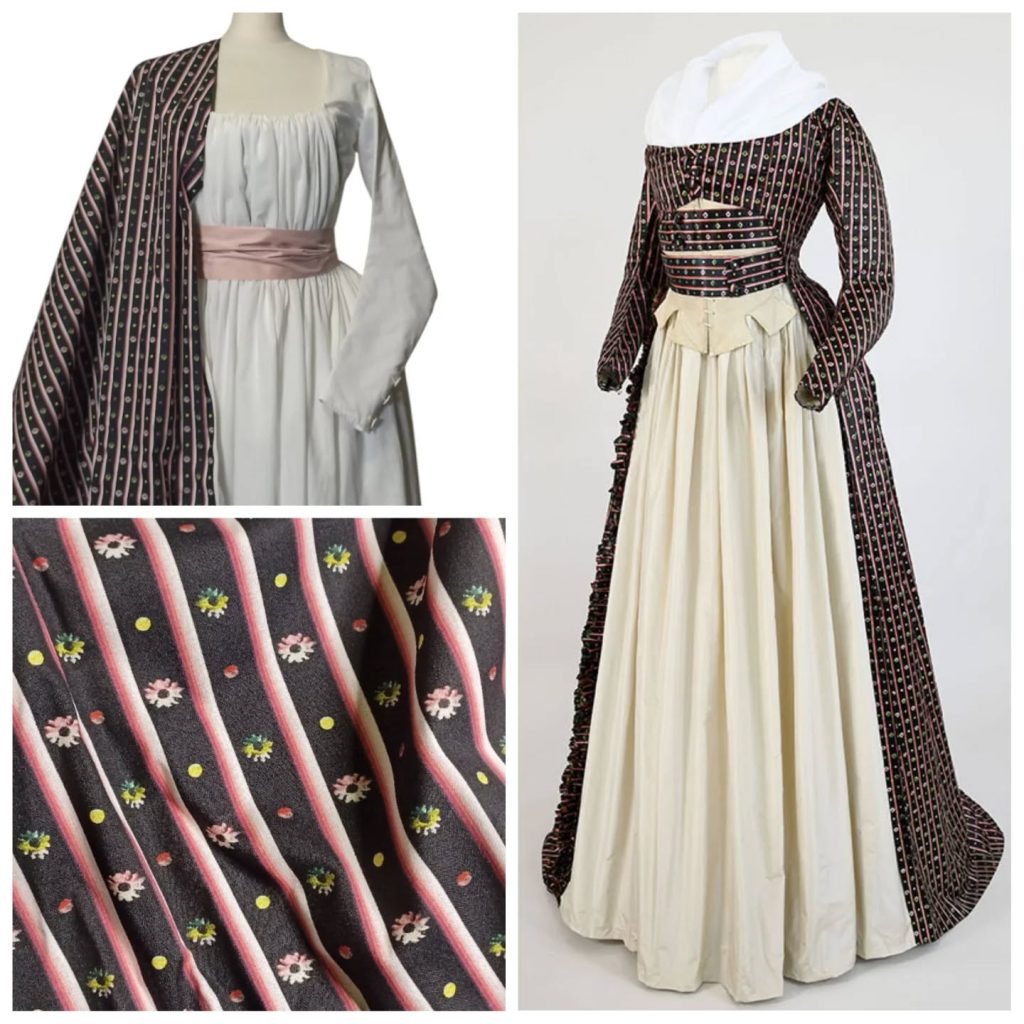
I prepared a custom-printed fabric for an 18th-century gown based on Patterns of Fashion 6 (Hopkins Collection, London, c. 1785–1792). The original striped satin was carefully analyzed using available museum images and documentation to understand its weave, color palette, and pattern repeat. Special attention was paid to the fabric’s structure and subtle color nuances, aiming to capture both the authenticity and quality of the original material.
The fabric was recreated using historically informed techniques, with minor adjustments made to clarify details and adapt to modern production methods. Limitations of available materials and contemporary printing technology were taken into account, while striving to preserve the characteristic texture and sheen of the satin.
This process balances historical fidelity with interpretative reconstruction, allowing the gown to be both accurate and practically wearable. Each fragment of the fabric reflects the spirit of the period, enabling contemporary viewers to appreciate the craftsmanship of past textile masters.
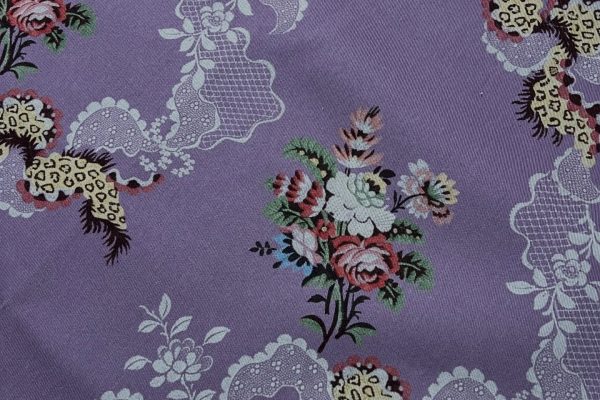
I created this fabric featuring a printed design on a lilac-purple ground, combining floral bouquets with stylized spotted motifs resembling animal print. The floral elements are composed of roses, smaller blossoms, and foliage rendered in muted yet varied colors, including soft pinks, greens, and off-whites, arranged in compact, repeatable clusters. Interspersed with the florals are abstract lace-like patterns with fine netted textures, creating a layered visual effect and suggesting a decorative, 18th–19th century-inspired aesthetic. The spotted motifs, rendered in contrasting light yellow and black tones with subtle shading, provide dynamic contrast and add a playful, textured element to the overall composition. This design demonstrates careful attention to color harmony, motif repetition, and the interplay between figurative and abstract decorative elements, and represents an original fabric I personally developed.
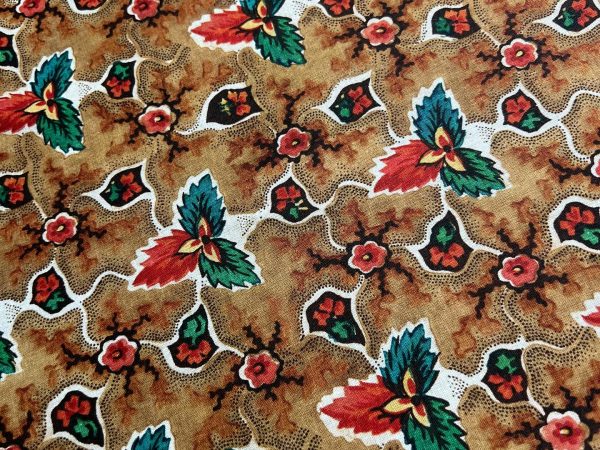
The textile originated from a museum collection and was carefully studied and documented by Kenna Elizabeth, who provided the 1830s dress pattern. The project proposed recreating the original material to enable an accurate reproduction of the historical garment.
The fabric, with its earthy ground and striking red and green floral pattern, was reconstructed directly from the surviving example. With the support of Brandon W. Brooks, Curator at the John L. Wehle Gallery, Genesee Country Village & Museum , the material was fully reproduced and prepared for use in sewing the 1830s gown.
The project involved not only recreating the fabric but also preserving every historical detail, including pattern, color, and textile structure.
This textile was inspired by an 18th-century silk from the Cooper Hewitt, Smithsonian Design Museum (Object ID: 18464159), donated by Harvey Smith. The original exemplified the intricate floral compositions of the period.
The recreated fabric, with richly colored blossoms on a luminous ground, was produced through detailed study of the original pattern, color, and weave structure. This project preserved the historical design while enabling the creation of authentic 18th-century garments.
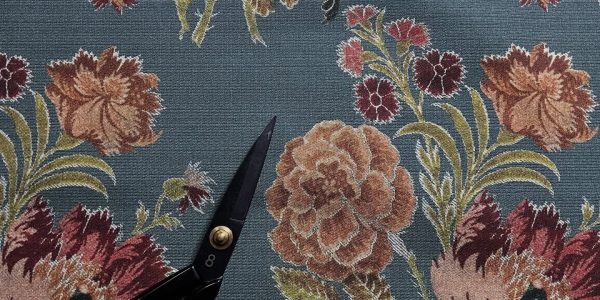
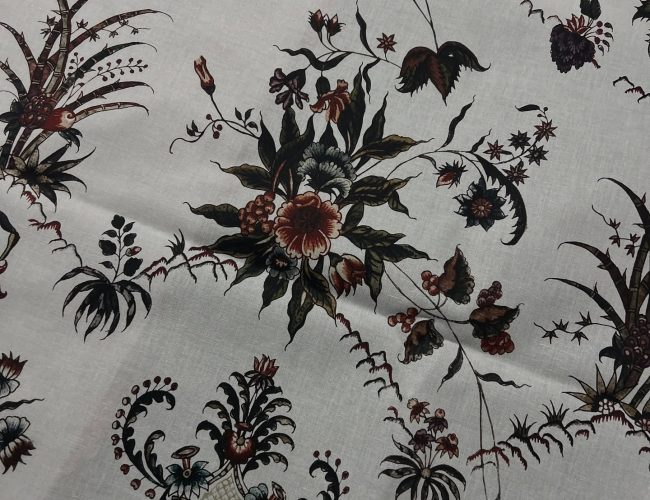
This fabric features a repeating printed design inspired by a late 18th-century textile from the Victoria and Albert Museum (IM.39-1934), dated to around 1785. Set on a light, linen-toned ground, the pattern combines asymmetrical floral bouquets, scrolling foliage, and ornamental elements in muted earthy colors, characteristic of late 18th-century decorative textiles.
The design is my own work, developed through close study of photographic documentation of the museum original. It represents an interpretative reconstruction rather than an exact reproduction, balancing historical reference with contemporary textile practice.