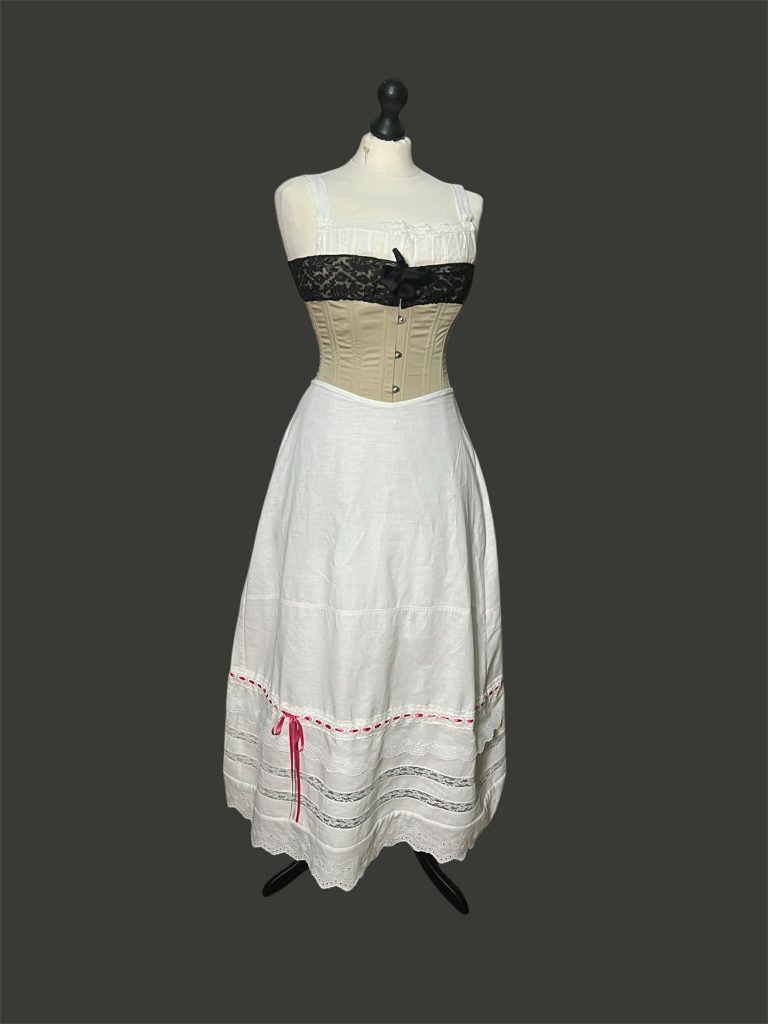
A lace chemise from 1912 and Petticoat, based on a fashion magazine
Hey, today’s post is a bit different from my usual area of focus. I got talked into attending a ball set at the beginning of the 20th century, and unfortunately, I had nothing to wear. So I had to make a chemise, a petticoat, and a corset. I’ve already written about the corset in a previous post, so now it’s time for the chemise and petticoat. They were fairly simple, so I’ll talk about them together.
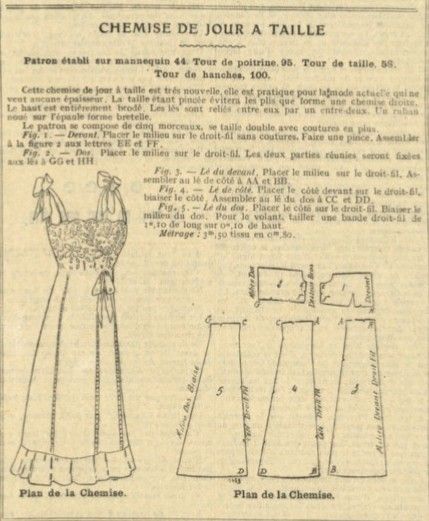
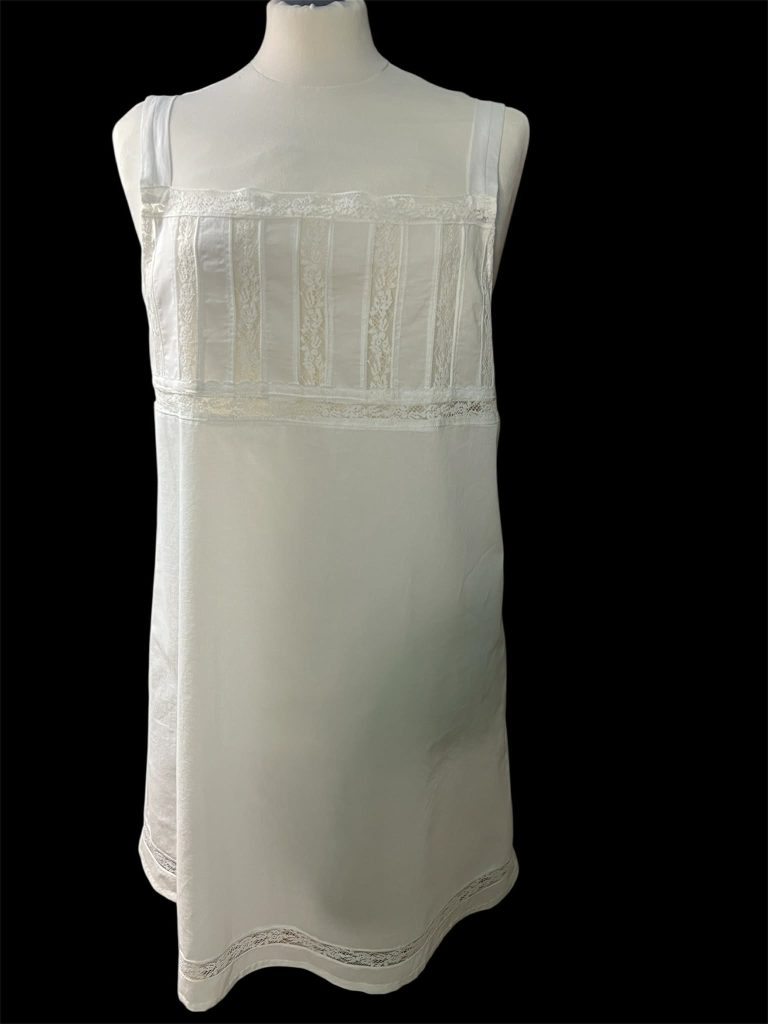
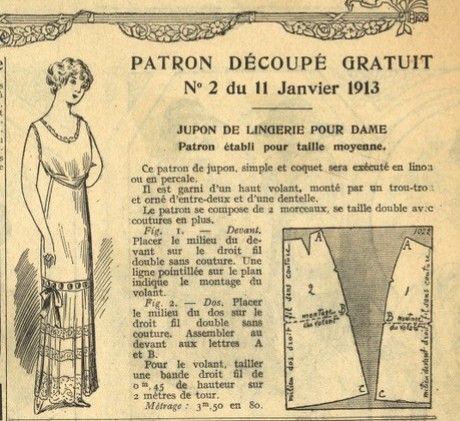
I decided to modify this pattern a bit. First of all, I wanted to keep it to a maximum of four pieces, so I combined the part below the bra of the chemise into two flared pieces. The upper part, the bra, I made according to the original pattern, but because I used so much lace, I didn’t add darts so as not to spoil the effect. It’s a bit baggier, but in my opinion, charming. Patterns like this existed back then, so it’s really just a matter of personal modification.
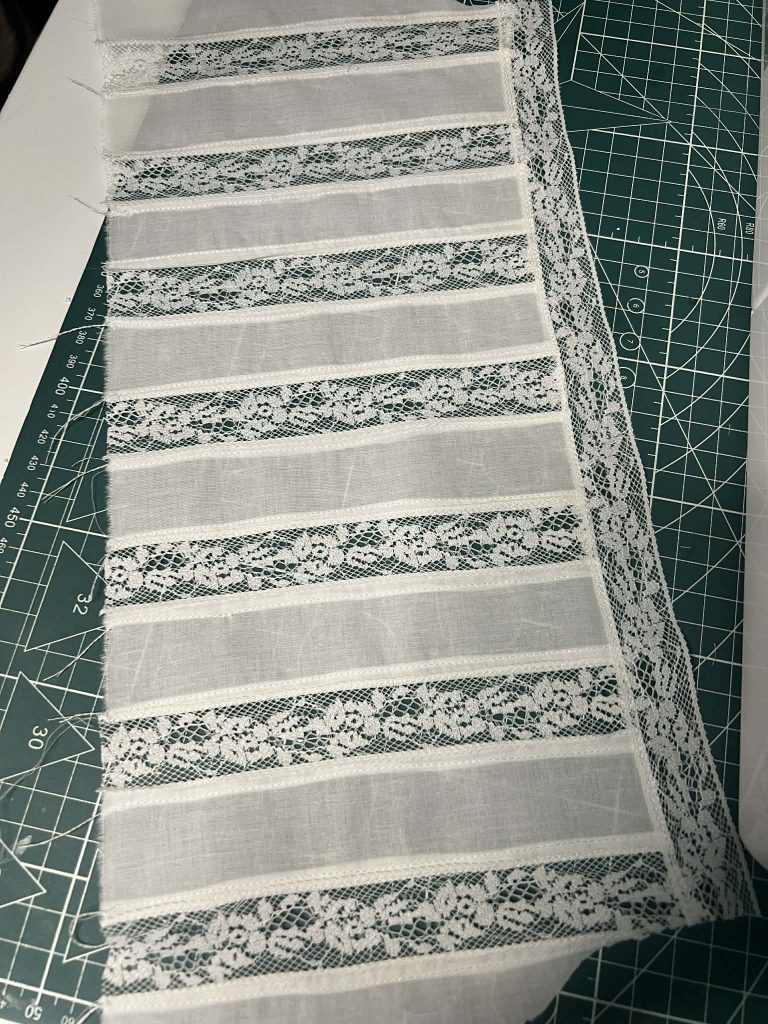
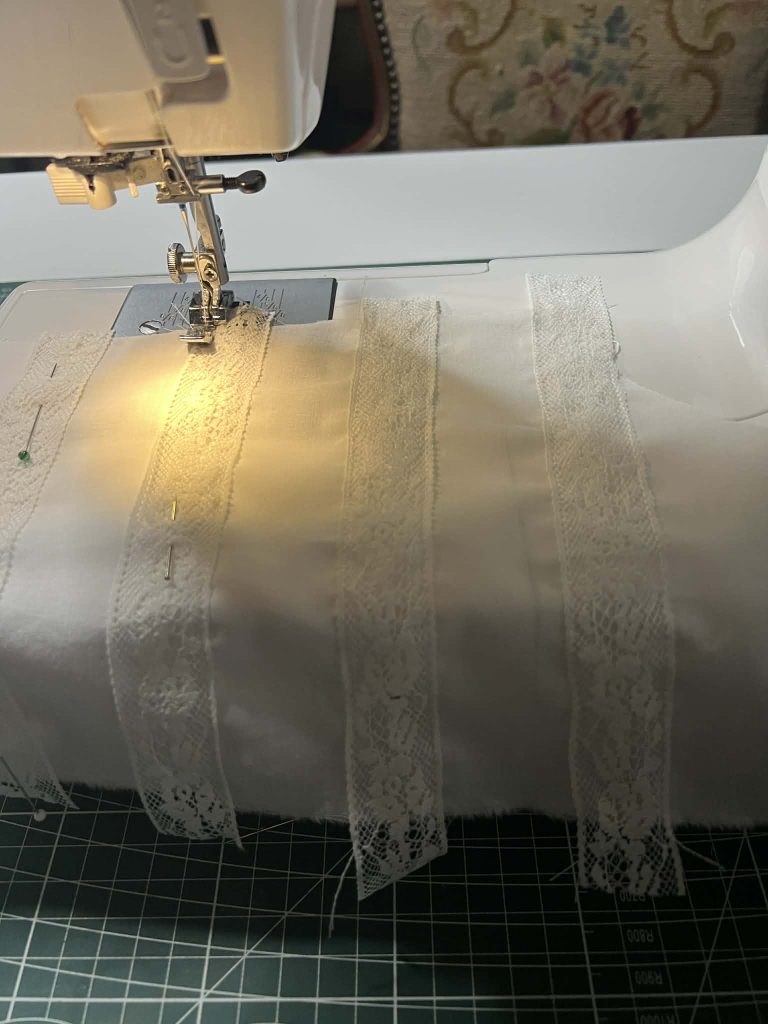
The method for sewing in the lace is quite simple, you just have to follow the correct order. First, we stitch the lace onto the fabric. Then, from the wrong side, we cut the fabric, fold it to the sides, and press it. From the wrong side, I sew a tiny zigzag stitch along the edge of the fabric, and then I trim the fabric right next to it. From the right side, nothing is visible, and the fabric doesn’t fray. I use this method to sew in all the lace trims and decorations.
I stitched all the pieces together using a French seam, so there are no raw edges visible from the outside. At the very end, I finished the top and bottom of the chemise by hand, and I added a lace trim—of course, I attached it the wrong way around, but I only noticed that later!
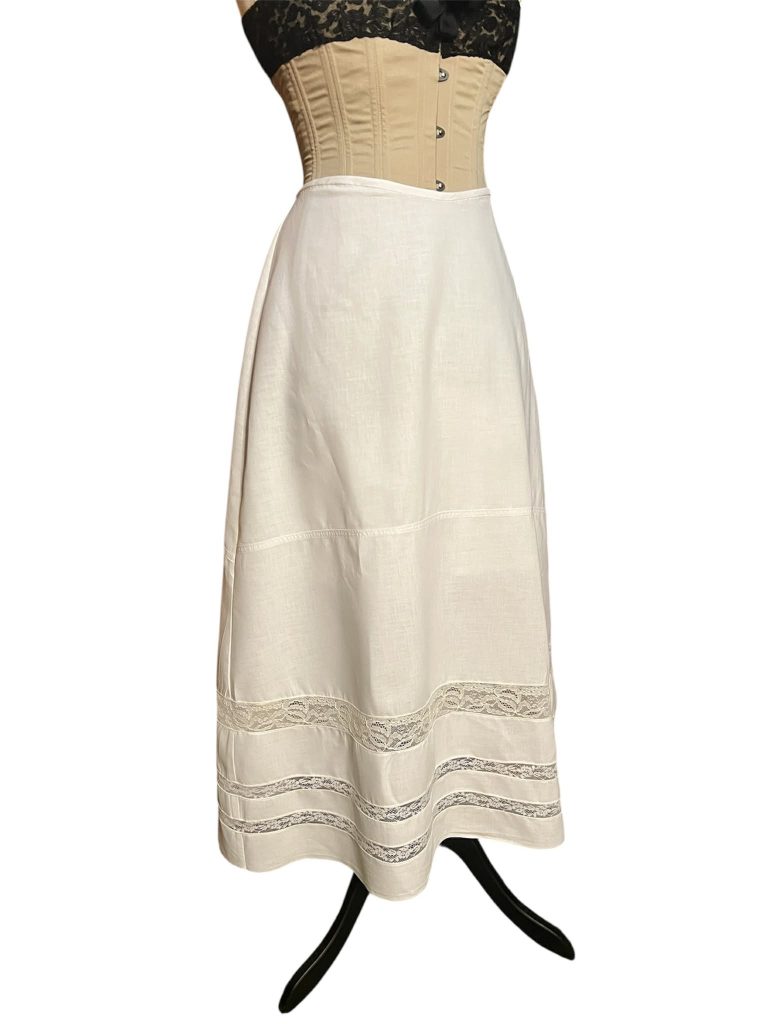
For the petticoat, I decided to use this pattern, and to be honest, what you see in the illustration versus the final result is a completely different effect. I won’t lie—I had an idea of how it might look, but I was quite charmed by the outcome. Most likely, the original, as noted, does have a separate hem, but it’s much lower, first of all, and second, it’s probably fuller and arranged in box pleats ( or it is just more fabric). Here, nothing really falls into place the way it should.
This petticoat isn’t boring, but the original pattern didn’t look quite the way I wanted it to, so I ended up modifying it a bit. I added ruffles of English embroidery, lace inserts, and a ribbon drawstring. Either way, it doesn’t look exactly like the illustration—I know that was just a marketing trick—but as a base for the petticoat, it works nicely, because the top is very well shaped. As I said, if you want the effect shown in the illustration, add more fabric to the lower part for width and gather it slightly.
This is how it looked before adding any decorations, but as I said, something might be a bit off—or maybe I just trusted the fashion magazine pattern a little too much! 😄